
A little about this find
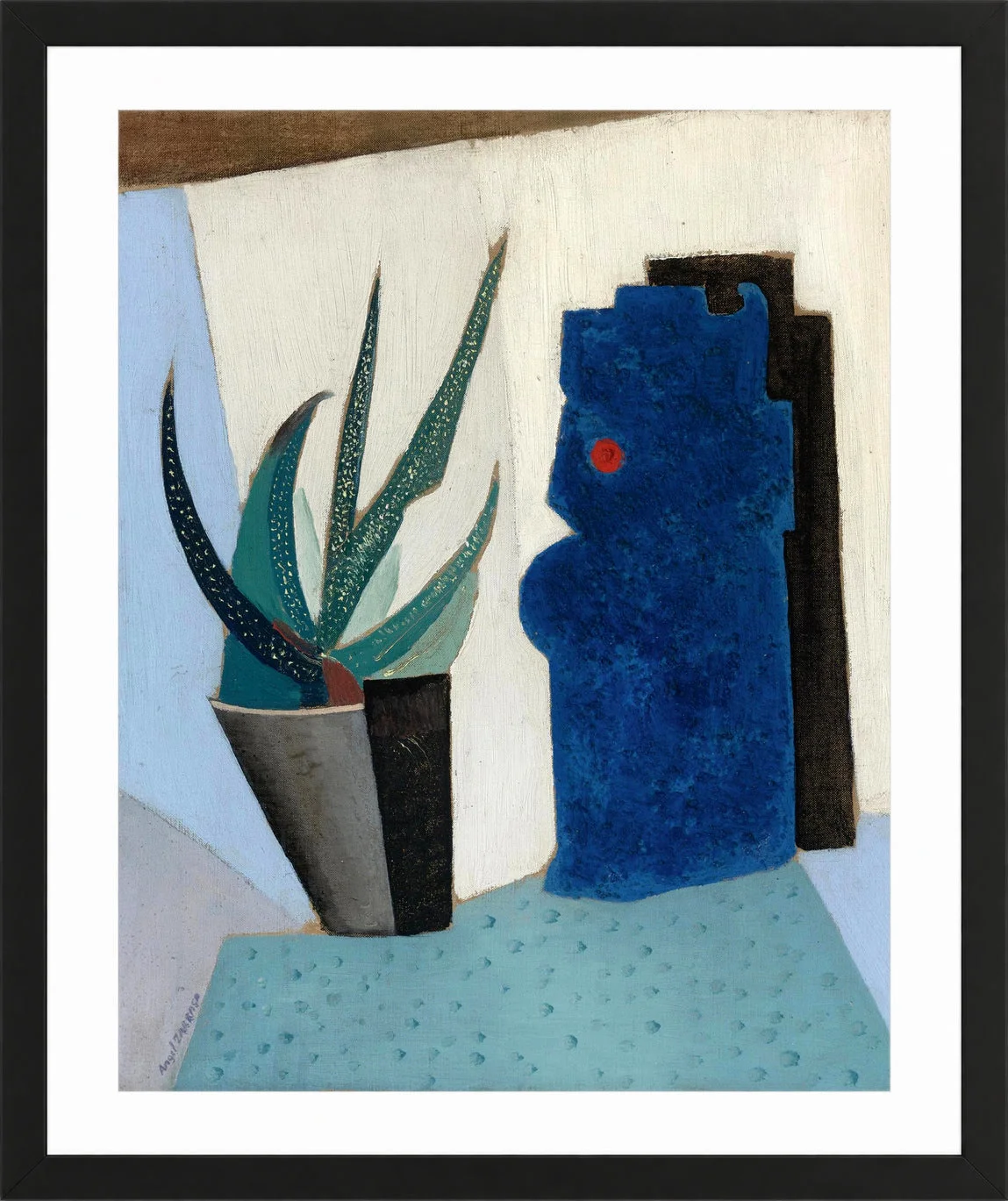
Still Life with Cactus (1916) by Ángel Zárraga. A cactus introduces a living, growing form into a genre often associated with cut fruit, containers and inert objects. That distinction gives Still Life with Cactus its particular attraction. A plant has an organic structure, yet in a still-life composition it is also treated as a shape occupying a defined space. The cactus brings associations of toughness and adaptation, but the painting need not be reduced to a symbol. Its visual interest can begin with the contrast between the plant's recognisable character and the stillness of its setting.
Still Life with Cactus: looking at the artwork
The 1916 date places the work among early twentieth-century explorations of commonplace subjects. It is useful to resist over-reading this historical context: the title does not tell us which influences informed the painting or where the plant was observed. Instead, the distinctive subject encourages close attention to what happens when a living specimen is made the centre of a fixed arrangement. A modest object becomes the basis for an extended act of looking.
A cactus also complicates the idea that still life is entirely lifeless. Its presence suggests persistence and growth within a genre devoted to fixed arrangements. This contrast is not a hidden story that needs to be solved; it is simply a rich way to think about the subject's presence.
↺ New
Ángel Zárraga Fine Art Print, Still Life with Cactus (1916)
 FROM THE SHOP OFGallery Thane
6200 available
SellRiot Fee included
Shipping & tax calculated at checkout.
Choose a variation to see its shipping weight.
Shop policies Shipping, cancellations, returns & refunds
Shop policies
This shop hasn’t published its shipping, cancellation, return, refund, or exchange policies yet.