
A little about this find
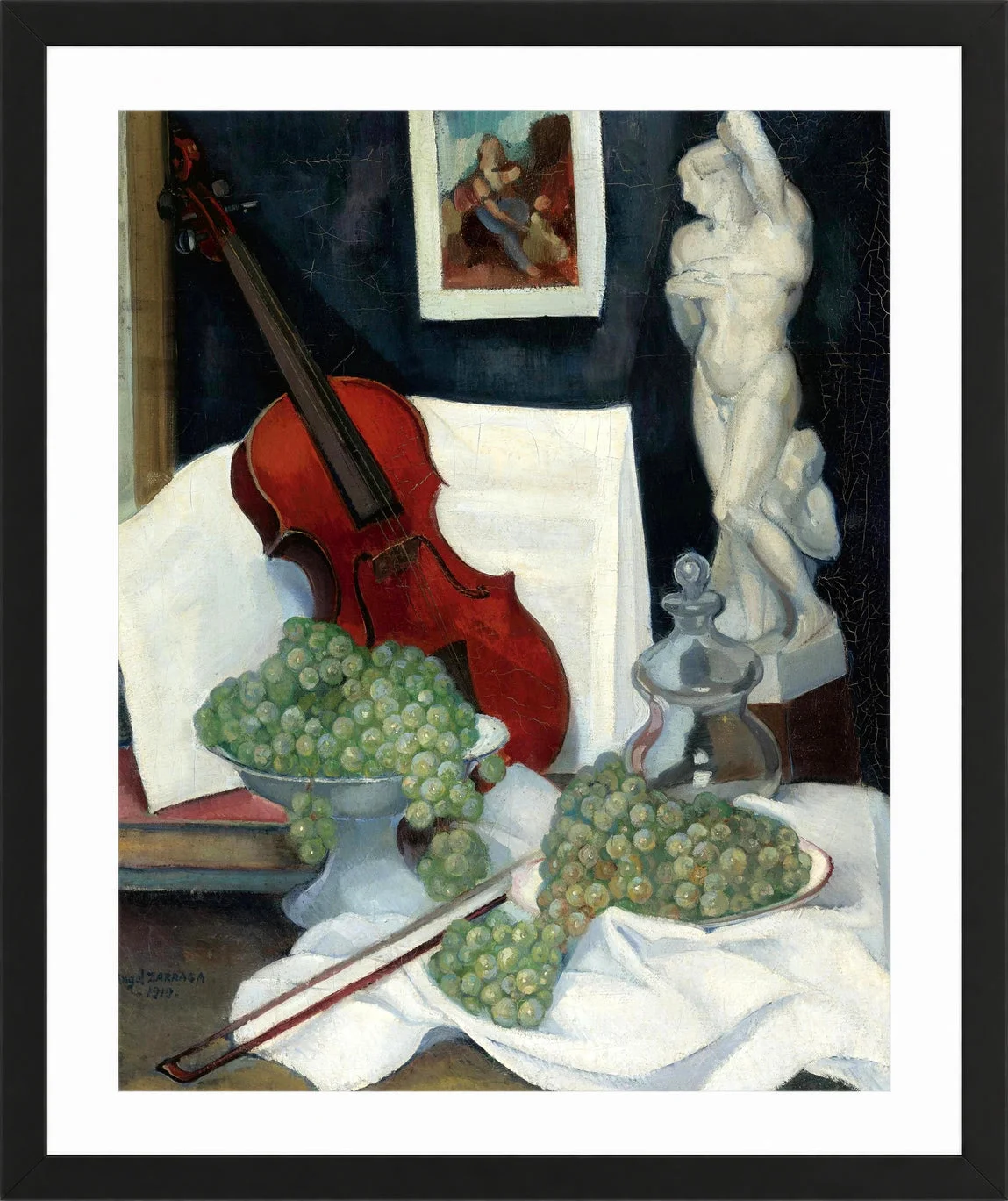
Still Life with a Violin (1919) by Ángel Zárraga. A violin is a particularly evocative object to introduce into a still life because it belongs simultaneously to the worlds of sight and sound. In a painting it is silent, yet the shape of the instrument may prompt a viewer to imagine music. Still Life with a Violin turns that paradox into part of its appeal. The instrument has a recognisable body, an elongated neck and a strong directional character, making it an interesting form to place among other objects.
Still Life with a Violin: looking at the artwork
The title tells us what to look for without prescribing how to interpret the arrangement. A violin might suggest performance, leisure or an absent musician, but none of those associations needs to be asserted as the artist's intended story. Dated 1919, the work belongs to a period when everyday objects were a fertile subject for experiments in composition. Its interest lies in the dialogue between a familiar musical instrument and the visual order of still life, where rhythm is experienced through form rather than sound.
The violin is a particularly fruitful object for this kind of painting because its purpose remains imaginable even when its sound is absent. The viewer can move between remembering what the instrument does and examining what it looks like. That movement between memory and observation gives the still life extra resonance.
↺ New
Ángel Zárraga Fine Art Print, Still Life with a Violin (1919)
 FROM THE SHOP OFGallery Thane
6200 available
SellRiot Fee included
Shipping & tax calculated at checkout.
Choose a variation to see its shipping weight.
Shop policies Shipping, cancellations, returns & refunds
Shop policies
This shop hasn’t published its shipping, cancellation, return, refund, or exchange policies yet.