
A little about this find
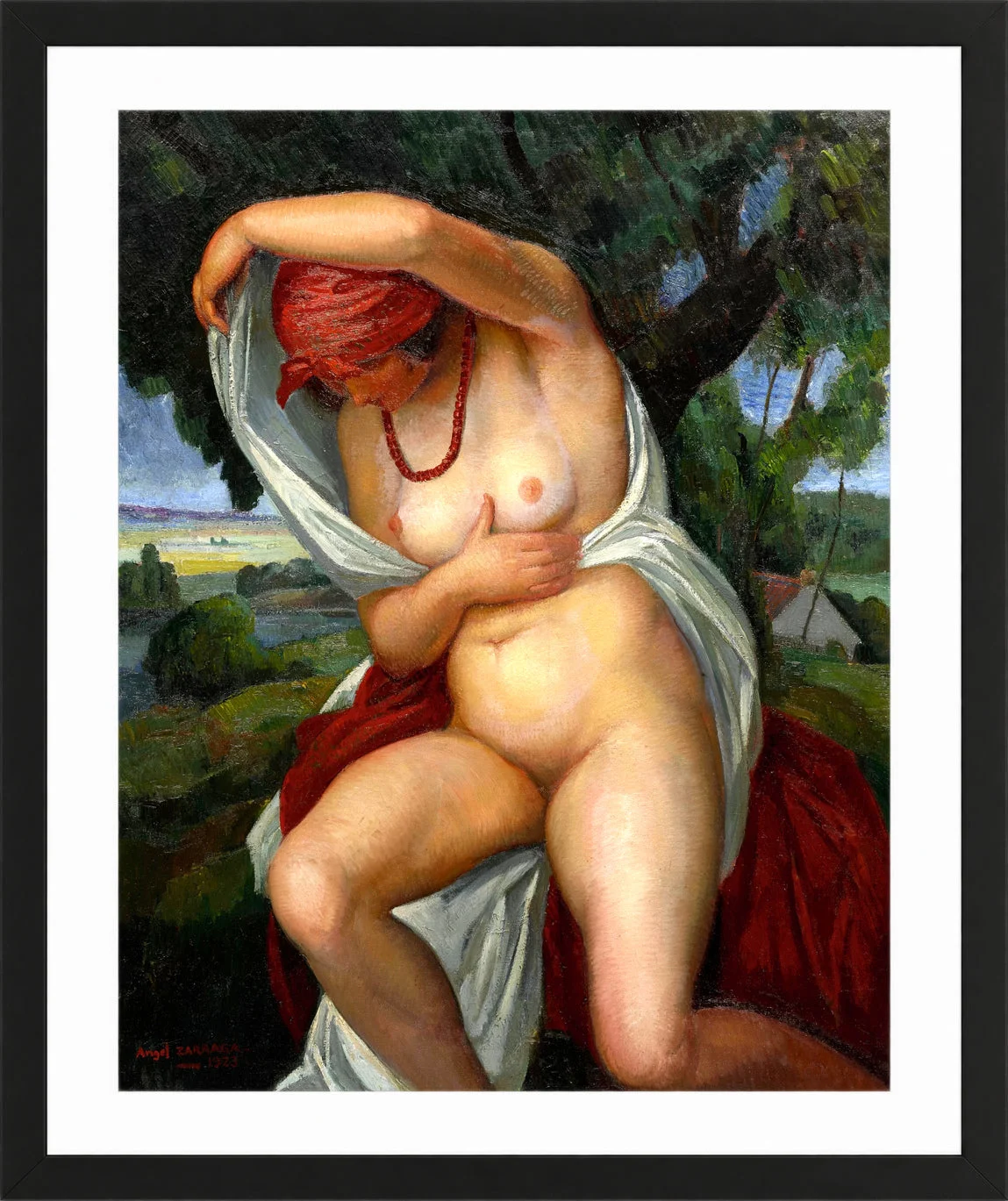
L’Été (1923) by Ángel Zárraga. A title as broad as L’Été, or Summer, is an invitation to interpret a mood rather than to identify a specific incident. The season can be conveyed through a figure, a landscape, a domestic setting or an arrangement of objects; the wording deliberately leaves the picture room to establish its own terms. That openness is part of this work's interest. Instead of looking for a narrative, the viewer can consider what makes a visual scene feel seasonal: duration, warmth, pause, activity or the perception of light.
L’Été: looking at the artwork
The painting's date of 1923 anchors the work, but the theme reaches well beyond one year. Summer is a recurring artistic subject because it gives ordinary appearances a particular sense of time. An image can evoke the season without explaining exactly where it is set or what took place. L’Été therefore rewards attention to its overall impression as much as to any individual motif, allowing the idea of summer to emerge through the painting as a whole.
The painting's openness is not an absence of subject. Summer is itself a strong organising idea, capable of bringing scattered details into a common emotional register. Rather than search for a single symbolic object, it can be more satisfying to ask how the whole image contributes to the sense of season.
↺ New
Ángel Zárraga Fine Art Print, L’Été (1923)
 FROM THE SHOP OFGallery Thane
6200 available
SellRiot Fee included
Shipping & tax calculated at checkout.
Choose a variation to see its shipping weight.
Shop policies Shipping, cancellations, returns & refunds
Shop policies
This shop hasn’t published its shipping, cancellation, return, refund, or exchange policies yet.