
A little about this find
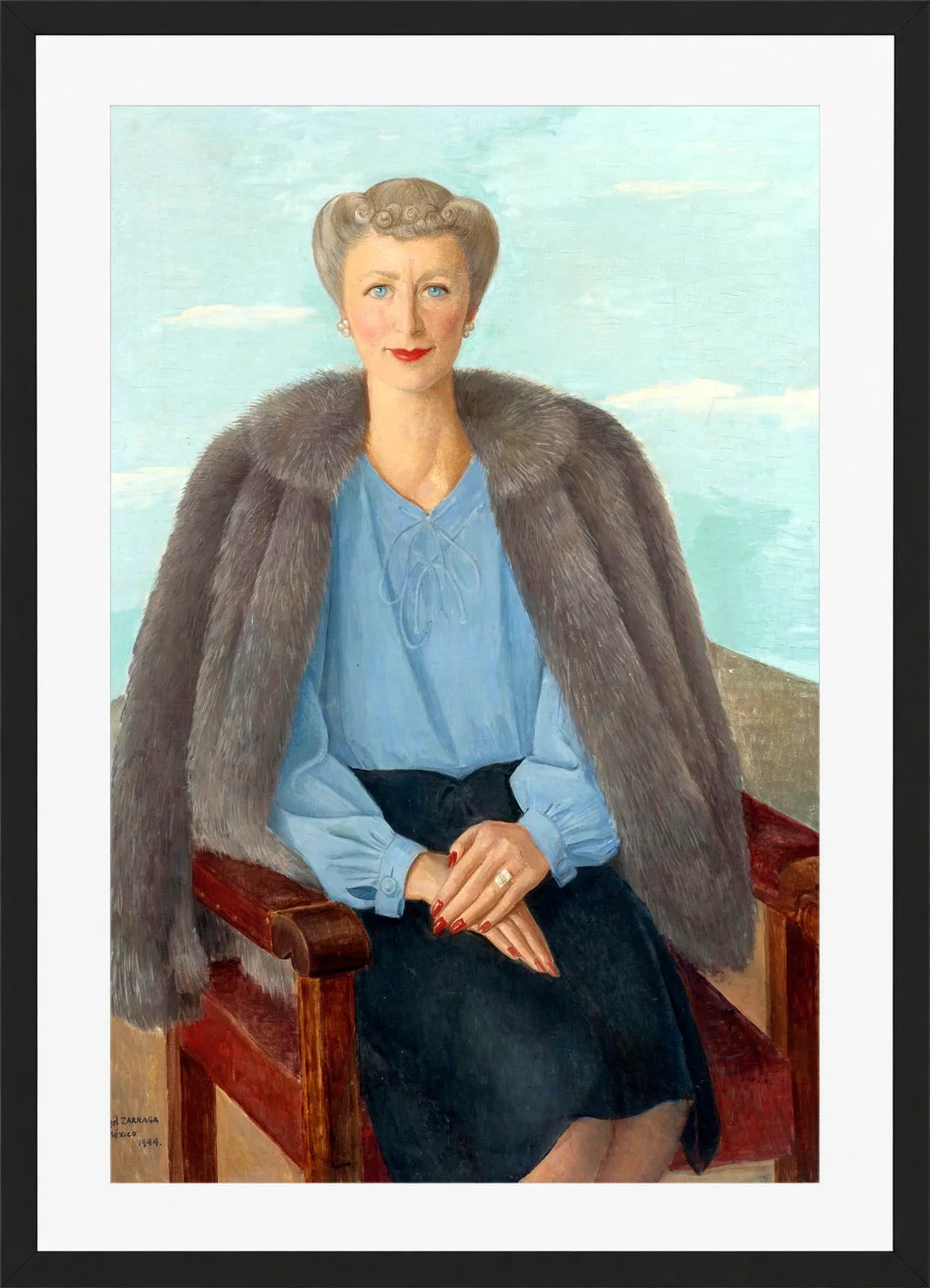
Portrait of a Lady (1944) by Ángel Zárraga presents a sitter whose name is not given in the title. This absence of biographical detail shifts attention towards the portrait itself: the human presence it records and the choices that shape how the sitter is seen. A portrait is more than a likeness. It is also an arrangement of posture, expression and pictorial space, through which an artist creates a particular encounter between subject and viewer.
Portrait of a Lady: presence and character
The date places the work in 1944, yet the title remains deliberately broad. That contrast between an exact year and an unnamed individual is part of its interest. Without a famous identity or an accompanying story to guide us, we can concentrate on the relationship between the figure and the surrounding composition. The smallest aspects of a portrait can shape its emotional register, while the overall balance determines whether the sitter seems close, distant, formal or reflective.
Portraiture also has an unusual relationship with time. The person represented belonged to a particular moment, but the painted image continues to invite attention long afterwards. Looking at Portrait of a Lady involves both recognising another human being and acknowledging that a painted likeness cannot tell us everything about a life. That space between what is visible and what remains private gives the subject a quiet depth.
↺ New
Ángel Zárraga Fine Art Print, Portrait of a Lady (1944)
 FROM THE SHOP OFGallery Thane
5600 available
SellRiot Fee included
Shipping & tax calculated at checkout.
Choose a variation to see its shipping weight.
Shop policies Shipping, cancellations, returns & refunds
Shop policies
This shop hasn’t published its shipping, cancellation, return, refund, or exchange policies yet.